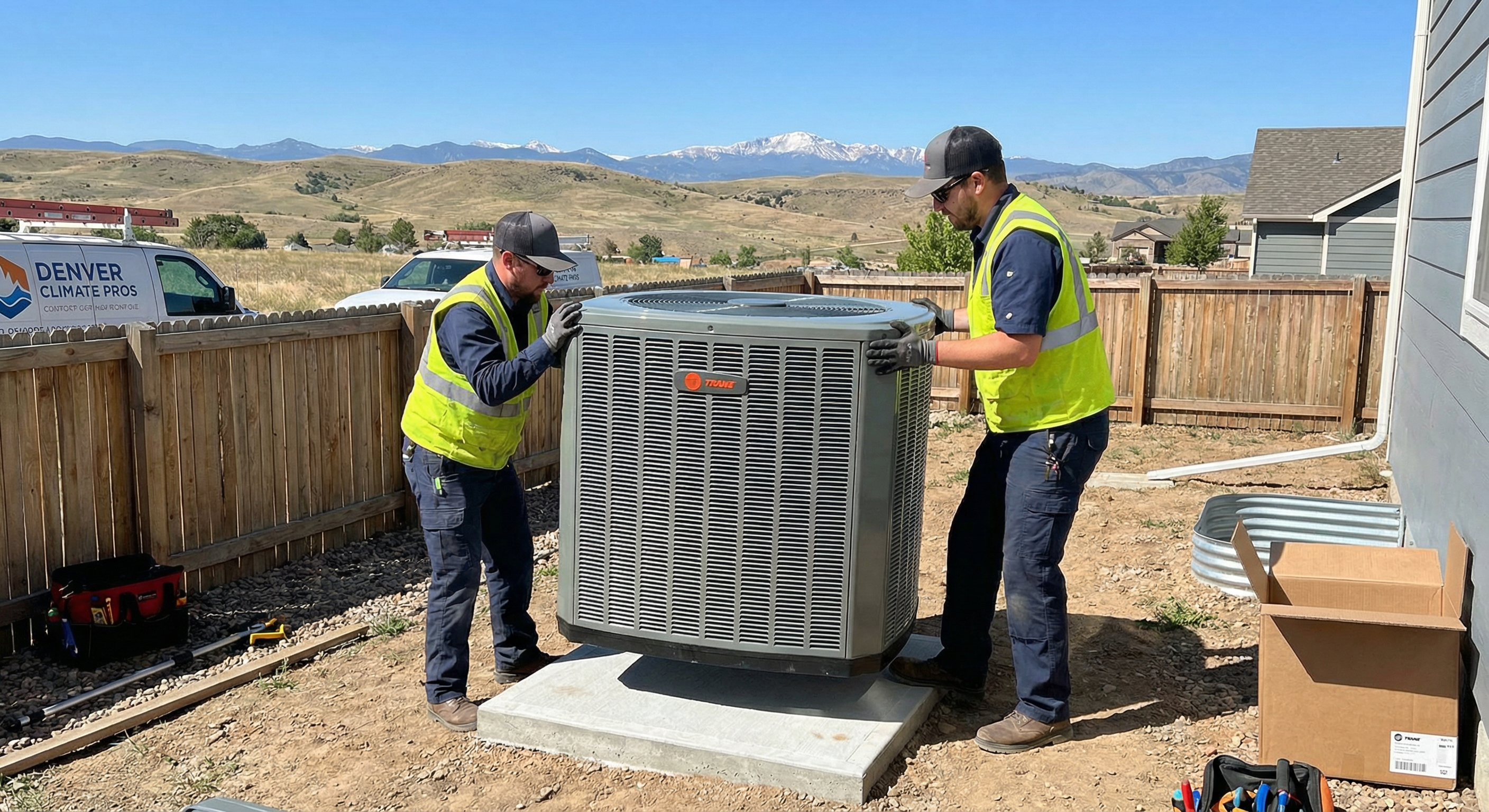
It's 2:00 PM on a 92-degree Denver afternoon, and your AC just started blowing warm air instead of cold. You check the thermostat - it's definitely set to "COOL" - but the vents are pushing air that feels like it's coming from a hair dryer, not an air conditioner.
If you're reading this right now because your AC isn't working, I've got good news: you're not facing an emergency that requires a $6,000 replacement. After serving the Denver metro for over 20 years, we've diagnosed this exact problem hundreds of times, and in 40% of cases, it's a single failed part that takes 20-45 minutes to replace.
Denver's Mile-High Challenge
At 5,280 feet elevation, your AC faces unique challenges
Higher capacitor failure rate compared to sea level
But here's what makes your situation unique: Denver's mile-high altitude changes everything about how AC systems work and fail.
The "Listen Test" That Tells the Whole Story
Before we get into the technical weeds, let me teach you the same diagnostic trick our techs use when they first arrive at your home.
Walk outside to your AC's outdoor unit (the big box with the fan). Is it running? Now listen carefully:
- You hear a fan spinning, but nothing else → 80% chance it's a bad capacitor
- Complete silence - nothing running at all → Power or thermostat issue
- Loud grinding or screeching → Compressor problem (more serious)
"I can already hear what part of the issue is just by standing next to the unit. When the fan's spinning but the compressor isn't running, I know we're dealing with a capacitor failure nine times out of ten."
Why Capacitors Fail 40% More Often in Denver
Here's what no one else is telling you: at 5,280 feet elevation, your AC capacitor works significantly harder than it would at sea level.
The air is 15% less dense up here, which means less cooling airflow over components. Your capacitor - which stores the electrical charge needed to start your compressor - runs hotter as a result. Add Denver's intense UV exposure (20-30% higher than sea level), and you've got the perfect recipe for early failure.
Then factor in Denver's 30-degree temperature swings between day and night. That thermal cycling - hot days, cool nights, hot days again - stresses every electrical component in your system.
The 5 Most Common Causes (In Order of Frequency)
Based on hundreds of service calls in Northglenn, Thornton, Westminster, Broomfield, Brighton, Firestone, Dacono, and Arvada, here's what actually causes "AC blowing warm air" in the Denver metro:
1. Failed Capacitor (40% of Cases)
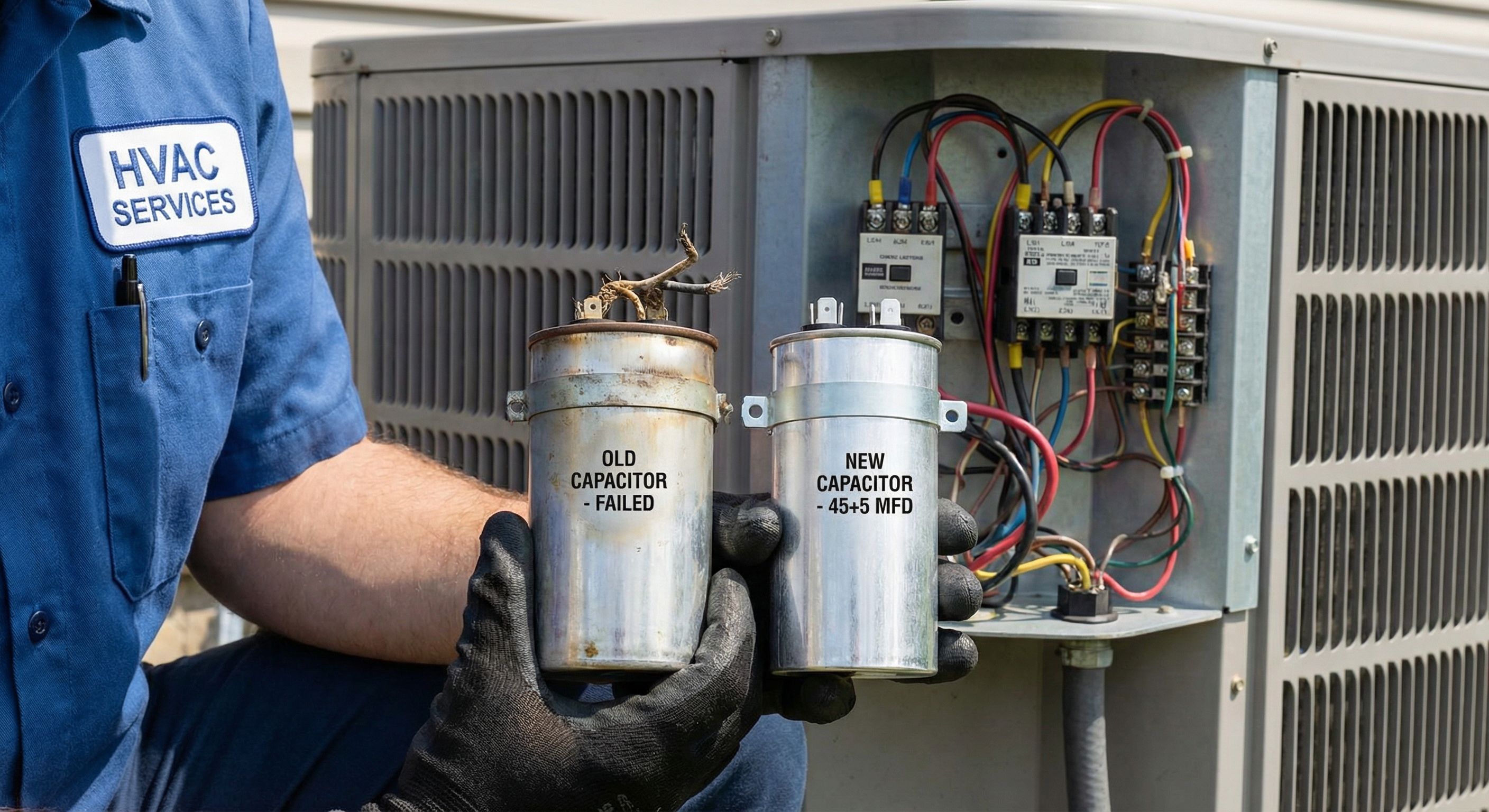
What it is: A cylindrical component about the size of a Red Bull can that stores electrical charge to start your compressor.
How it fails: The "mushroom top" is the telltale sign. When a capacitor fails, the top bulges out like a mushroom. Sometimes it even leaks oil.
Why it happens in Denver: High altitude + UV exposure + temperature cycling = shorter lifespan.
What it costs: $325 in the Denver area (20-45 minute repair).
2. Low Refrigerant (25% of Cases)
What it is: The chemical that actually cools the air in your system. Think of it like the coolant in your car's engine.
How it fails: Your system doesn't "use up" refrigerant - it's a closed loop. If you're low, you have a leak somewhere.
Signs to look for:
- Ice buildup on outdoor unit
- Hissing or bubbling sounds
- System runs constantly but doesn't cool
What it costs: $400-$600 to locate leak, repair, and recharge system.
3. Dirty Outdoor Coils (15% of Cases)
What it is: The fins on your outdoor unit that release heat from the refrigerant.
How it fails: Denver's dry climate means more airborne dust. When those coils get caked with dirt, they can't release heat effectively. Your system essentially chokes.
What to look for: Outdoor unit covered in cottonwood fluff, dirt, or grass clippings.
What it costs: $150-$250 for professional coil cleaning.
Can you DIY it? Partially. You can gently spray the outside with a hose to remove surface debris. But deep cleaning requires specific chemicals and tools.
4. Thermostat Issues (10% of Cases)
What it is: The brains of your system - tells your AC when to turn on and off.
How it fails:
- Someone accidentally switched it to "HEAT" instead of "COOL"
- Dead batteries (if it's battery-powered)
- Lost connection to AC unit
What it costs: $0 if it's just settings. $150-$300 for replacement if the unit itself failed.
5. Compressor Failure (5% of Cases)
What it is: The heart of your AC system - the pump that circulates refrigerant.
How it fails: Age, electrical surge, or running with low refrigerant damages internal components.
What it costs: $1,500-$2,500 to replace. At this point, you're often better off replacing the whole outdoor unit.
Can you DIY it? No. This is a multi-hour job requiring specialized tools and refrigerant handling.
Standard service: 2-4 hour response | Emergency: 1-2 hour response
Call Now Schedule OnlineRequest a Free Estimate
Fill out the form below and we'll get back to you within 2 hours
Prefer to call? (303) 351-1667
What You Can (And Can't) Check Yourself
Before you call us, here's what you can safely check on your own:
Γ£ô Safe DIY Checks
- Check your thermostat: Is it set to COOL (not HEAT or FAN)? Is the target temperature at least 5 degrees below current temp? Are the batteries fresh?
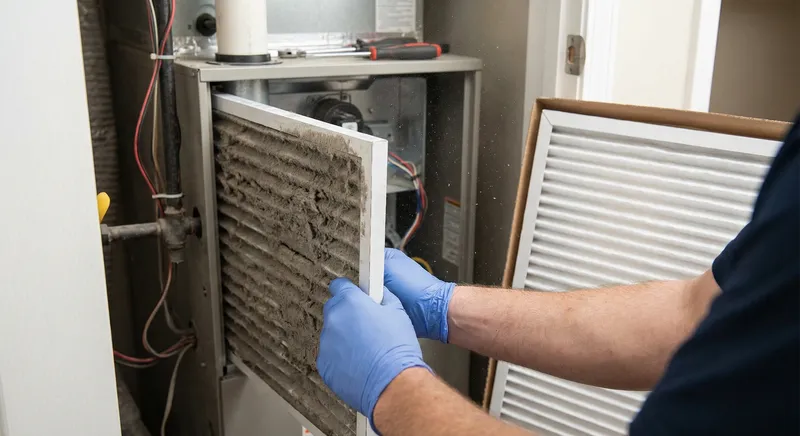
- Replace your air filter: In Denver's dry climate, change every 60 days (not 90 like at sea level). Clogged filter = restricted airflow = warm air. $3-$15 fix you can do in 2 minutes.
- Check your circuit breaker: Find your electrical panel. Look for tripped breakers (switch in middle position). Reset by turning fully OFF, then back ON.
- Clear debris from outdoor unit: Remove leaves, cottonwood fluff, grass clippings. Cut back plants at least 2 feet on all sides. Gently spray coils with hose.
Γ£ò DO NOT Attempt
- Capacitor replacement → 440 volts stored even when power is off. Deadly.
- Refrigerant work → Requires EPA certification. Illegal without it.
- Electrical repairs → High voltage. Electrical fire risk.
- Compressor work → Requires license, specialized tools, refrigerant handling.
The Real Diagnostic Process (What We Actually Do)
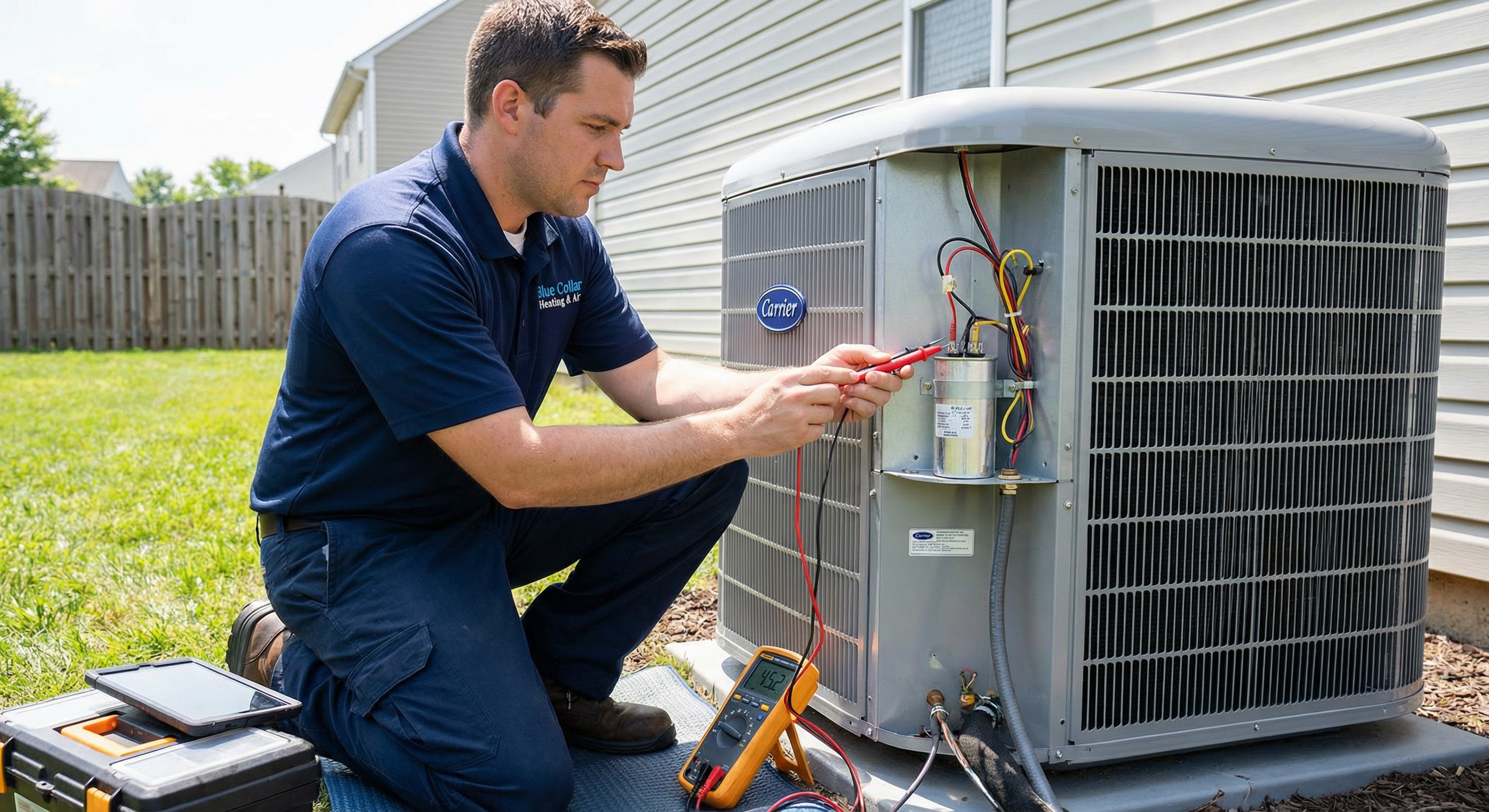
When one of our techs shows up at your home in Northglenn, Thornton, Westminster, Broomfield, Brighton, Firestone, Dacono, or Arvada, here's exactly what happens:
Step 1: Listen (30 seconds)
Before we even open the unit, we listen. Fan running but no compressor = likely capacitor.
Step 2: Check the Capacitor (2 minutes)
We use a multimeter set to microfarads. A healthy 35/5 capacitor should show:
- 5 on the fan side
- 35 on the compressor side
If we get a zero reading, the capacitor is toast.
Step 3: Replace the Part (20-40 minutes)
We carry every common capacitor size on our trucks. No "coming back tomorrow" or ordering parts.
Step 4: Verify the Fix (5 minutes)
We check amp draw: The compressor should run well under its nameplate rating. Example: If the nameplate says 26.4 RLA (run load amps) and we're seeing 14.76 amps, we're in great shape.
We check delta T: This is the temperature difference between your return air and supply air. We want to see 16-22 degrees. If we're getting 48┬░F supply and 69┬░F return, that's a 21-degree delta T - perfect.
"Much different sound now. You can hear the roar of that compressor going. System's working perfect."
Real Story: Thornton Homeowner Saves $5,000
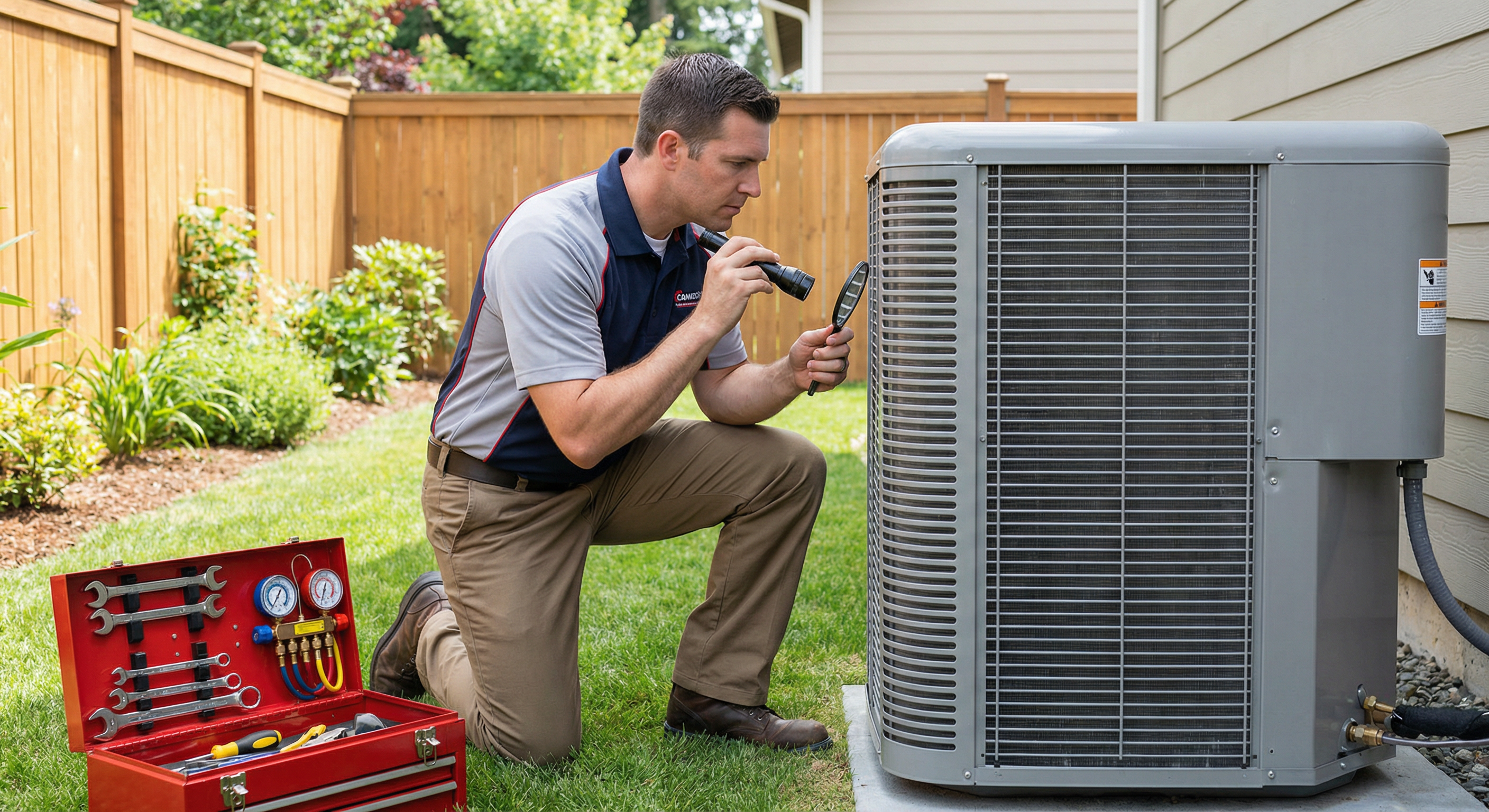
Last June, we got a call from a homeowner in Thornton. Another company had quoted him $6,200 for a full AC replacement. They told him his 12-year-old system was "shot."
We came out for a second opinion. Turns out it was a failed capacitor and a dirty outdoor coil. Total repair: $425.
The homeowner called us back two weeks later to thank us. His AC was running better than it had in three years.
The lesson: When someone tells you that you need a full replacement, get a second opinion. Yes, sometimes you do need a new system. But not when a $20 capacitor is the real culprit.
Why This Matters More at 5,280 Feet
Everything I've described above is true everywhere. But Denver's altitude makes three specific problems worse:
Problem 1: Reduced Cooling Capacity
At sea level, your AC moves 90,000 pounds of air per hour. At 5,280 feet, it only moves 72,000 pounds. That's a 20% reduction in airflow.
Your system has to work 15% harder to achieve the same cooling as it would in Kansas City.
Problem 2: Faster Component Wear
Thinner air = less cooling airflow over electrical components = they run hotter = they fail sooner.
This is especially true for capacitors (fail 5-7 years here vs 10 years at sea level), contactors, and compressor windings.
Problem 3: UV Degradation
At a mile high, UV radiation is 20-30% more intense. The plastic housing, wiring insulation, and capacitor casing all degrade faster from sun exposure.
What You Should Do Right Now
If your AC is currently blowing warm air, follow this exact sequence:
Immediate Steps (Do These First):
- Check your thermostat → Set to COOL, target temp at least 5┬░ below current temp
- Check your air filter → Replace if it looks dirty or clogged
- Check your circuit breaker → Reset if tripped
- Go outside and listen → Fan running but no compressor = likely capacitor
If Those Don't Work:
Call us at (303) 351-1667
- Standard service: 2-4 hour response time
- Emergency service: 1-2 hour response (add $150 surcharge)
- Upfront pricing: We tell you the cost before we start any work
- Service area: Northglenn, Thornton, Westminster, Broomfield, Brighton, Firestone, Dacono, Arvada, and surrounding Denver metro
How to Prevent This from Happening Again
After we fix your AC, here's how to keep it running:
1. Change Your Filter Every 60 Days
Not 90 days like the package says - that's for sea level. Denver's dry air has more dust. Set a recurring reminder on your phone.
2. Annual Maintenance in April or May
We test your capacitor, check refrigerant, clean coils, and verify electrical connections. Costs $150-$200 and catches problems before they become expensive emergencies.
3. Keep Outdoor Unit Clear
Trim back plants 2 feet on all sides. Rinse coils gently with a hose once a month in summer.
4. Don't Close More Than 20% of Vents
Closing vents in unused rooms restricts airflow and stresses your system. Your AC was sized to cool your whole home.
5. Install a Programmable Thermostat
Set it to 78┬░F when you're home, 85┬░F when you're away. The biggest stress on components is constant on/off cycling.
FAQ: Your Top Questions Answered
Final Thoughts: Don't Panic, Just Call
I've been doing this for 20+ years in Denver. Almost every "AC blowing warm air" call is a simple repair. The homeowner is stressed, sweating, and worried about a massive bill. Then we show up, replace a $20 capacitor, and they're back to 68-degree comfort in under an hour.
The key is calling someone who:
- Knows Denver's altitude challenges
- Gives you upfront pricing
- Actually carries parts on their truck
- Won't try to sell you a new system when you just need a repair
That's us. Blue Collar Heating & Air. Northglenn born, Denver metro raised.
Or if it's 2:00 AM and 90 degrees in your bedroom, we're available 24/7 for emergencies.
Call Now Request ServiceRequest Your Free Estimate
Not an emergency? Fill out the form and we'll get back to you within 2 hours
Need immediate help? Call us now: (303) 351-1667
Ready to Get Help?
Blue Collar Heating & Air serves Northglenn, Thornton, Westminster, and surrounding areas.
Or call directly: (303) 351-1667